Geometrisation of Shogi Pieces
Design
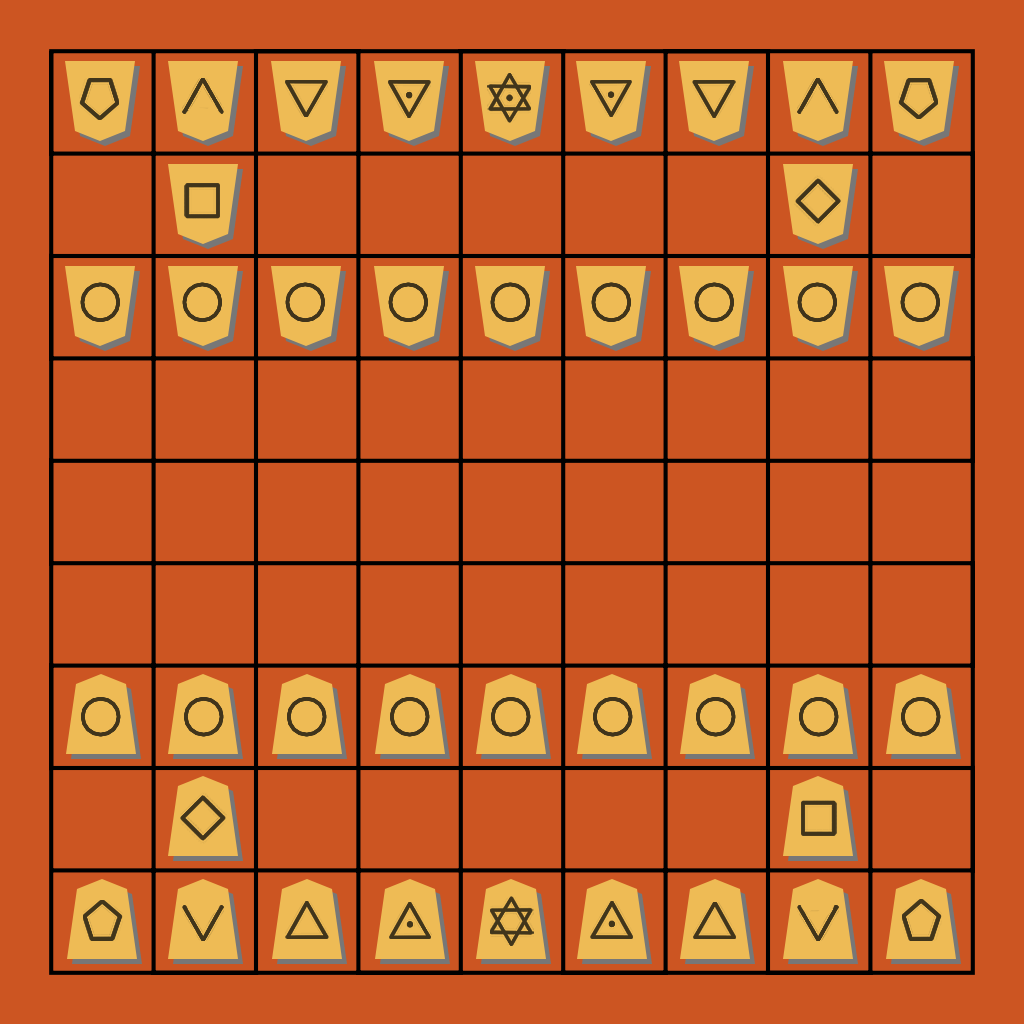
Since shogi relies on orientation to distinguish between own and opponent pieces, the designs for both sides will be identical. As orientation is the only way to distinguish pieces, additional markings must be included if there are no directional indicators. During actual play, the traditional shogi piece shapes, which indicate orientation, will still be used.
- Jeweled General (玉): Hexagram.
- King General (王): Hexagram with a dot in the centre.
- Rook (飛): Square.
- Bishop (角): Square rotated by 45 degrees.
- Gold General (金): Equilateral triangle with a dot in the centre.
- Silver General (銀): Equilateral triangle.
- Knight (桂): Inverted triangle without a base, resembling a ‘V’.
- Lance (香): Pentagon.
- Pawn (歩): Circle.
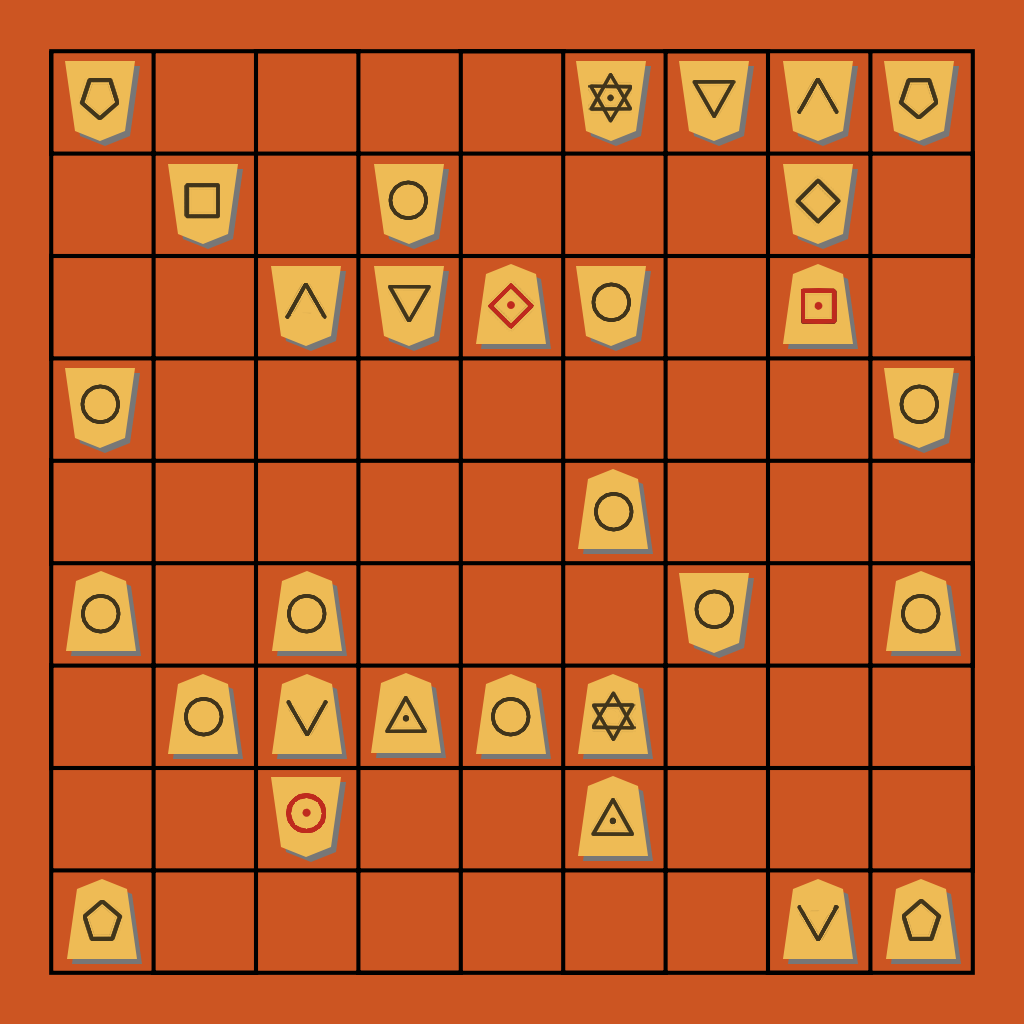
Promotable pieces are promoted in the same way: a red dot is added to the centre, and their colour changes from black to red.
Design Explanation
- Jeweled and King: Representing the centre of power, with symmetry and solidity. The dot on the King General's piece symbolises authority.
- Rook and Bishop: The square indicates how it moves
- Gold: The Guardian of the Sovereign. The triangle symbolises stability, whilst the central point represents status.
- Silver: Secondary Sovereign Guardian; its form derives from the Gold General; after promotion, it resembles the Gold General.
- Knight: The inverted triangle indicates the way it moves.
- Lance: The pentagon points forwards, indicating the way it moves.
- Pawn: Represents the most basic role; the circle can also be interpreted as a shield.